
Published on 04.11.2026
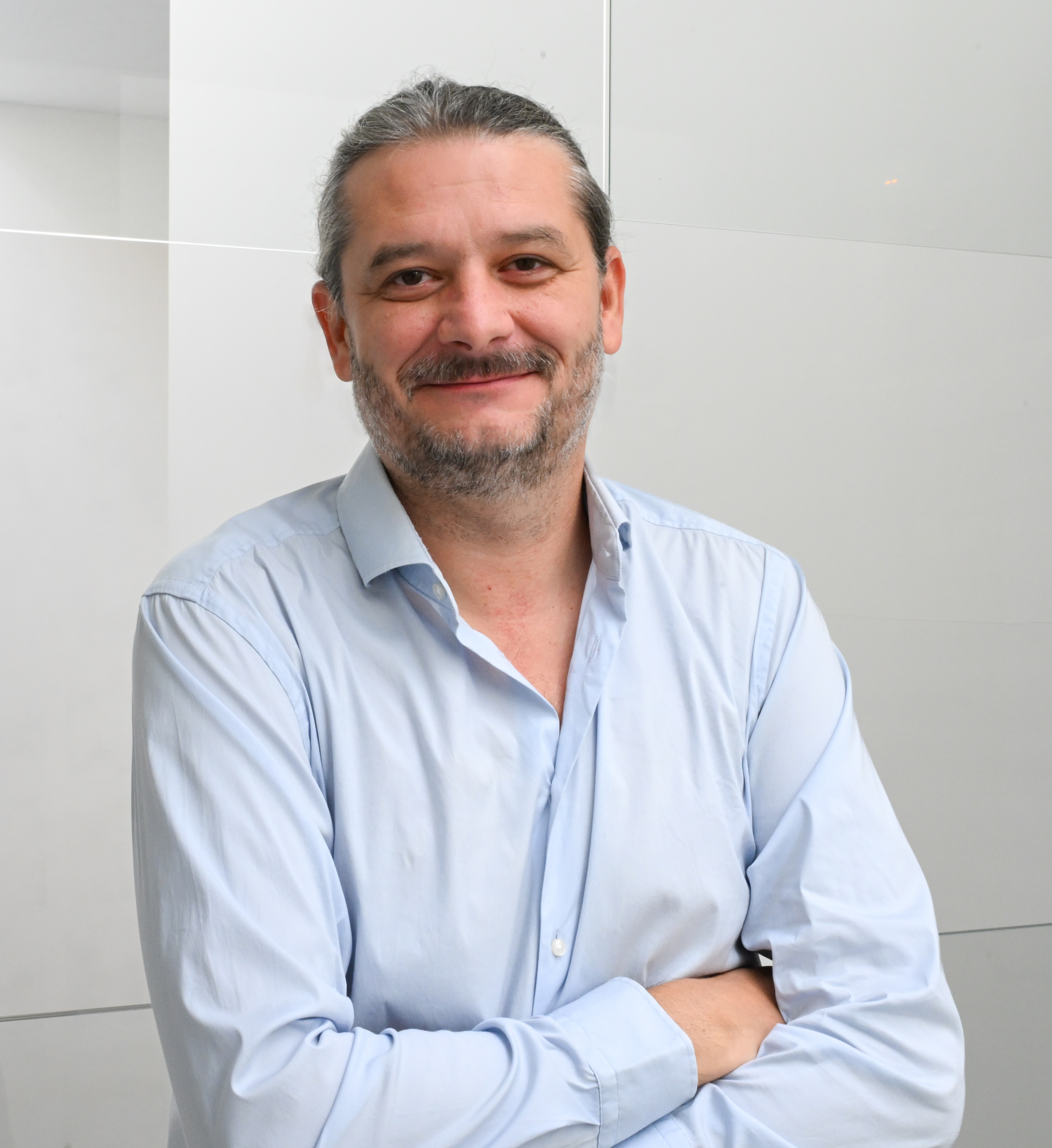 Julien Prudent, a cell biologist and internationally recognized specialist in mitochondrial biology, is taking over leadership of a laboratory dedicated to the fundamental mechanisms that organize mitochondria within our cells: the remodeling of their membranes, their contacts with other organelles, and the maintenance and control of their own DNA.
These fundamental mechanisms allow mitochondria to continually adapt to the needs of cells. When they become dysregulated, cellular function can be profoundly affected, contributing to numerous human diseases, from neurodegenerative diseases to metabolic disorders, as well as immune dysregulation, certain cancers, and mitochondrial diseases themselves.
For five years, he will hold a France 2030 Excellence Chair in Biology and Health, under the name MitoDNA-QC, operated by the French National Research Agency. The funding from the Excellence Chair, which aims to attract world-class scientists to France and strengthen the bridges between basic research and medical innovation, will particularly support the laboratory’s research on quality control mechanisms of mitochondrial DNA.
With Julien Prudent’s research, we will continue the pioneering work of Arnold Munnich, a driving force behind the genetic discovery of mitochondrial diseases, and Agnès Rötig, a major figure in their molecular and clinical characterization, and bring diagnostic and therapeutic solutions to families.
Two genomes in every cell: a key to understanding disease
Mitochondria are often described as the “powerhouses” of our cells. They produce the energy essential for the functioning of the brain, heart, muscles, and many other organs. But their role is not limited to energy production: they are true signaling platforms that take part in many physiological functions, including metabolism, the control of cell death, and immune responses.
Mitochondria are also extremely dynamic structures. Their membranes are constantly remodeled through fusion and division, and they form close contact sites with other compartments of the cell. These contacts allow, among other things, the exchange of lipids, ions, and signals, and play an essential role in coordinating cellular functions.
But they have one essential particularity: they possess their own DNA, distinct from the DNA found in the cell’s nucleus.
Each cell generally contains hundreds, even thousands, of copies of this mitochondrial DNA. These copies are not necessarily all identical. A single cell can harbor both normal copies and copies carrying a mutation: this phenomenon is called heteroplasmy.
This coexistence is decisive. As long as the proportion of mutated mitochondrial DNA remains limited, the cell can continue to function. But when the number of mutated copies becomes too high, or when the total number of mitochondrial DNA copies decreases, energy production is disrupted. Tissues with the highest energy demands, notably the brain, heart, muscles, and eyes, can then be particularly affected.
Mitochondrial diseases form a very broad and heterogeneous group of genetic diseases. They can appear in childhood or later in life, with symptoms that vary widely from one patient to another. Diagnosis is often complex, and for the vast majority of these diseases, available treatments remain largely aimed at managing symptoms rather than correcting the genetic cause.
Beyond inherited mitochondrial diseases, these same alterations (in mitochondrial dynamics, contacts between organelles, and control of mitochondrial DNA) are also associated with far more common conditions in the general population, from neurodegenerative diseases to cancers, as well as metabolic disorders and immune dysregulation.
Understanding how the cell sorts its mitochondrial DNA
Mitochondria are not static structures. They constantly fuse, divide, and reorganize to adapt to the cell’s needs. This mitochondrial dynamism plays an essential role in energy production, but also in the quality and distribution of mitochondrial DNA.
As part of this Excellence Chair, the MitoDNA-QC project will seek to better understand the mechanisms that allow mitochondria to control the quality of their DNA, as well as the consequences of their dysregulation for cellular function. Julien Prudent’s laboratory will study three complementary aspects:
First, it will seek to understand how the inner membrane of the mitochondrion detects defective elements. Next, it will study how the cell regulates the number of mitochondrial DNA copies and how the proportion of mutated copies changes. Finally, it will study the consequences of inhibiting these quality control mechanisms on cellular functions, and in particular on the activation of inflammatory responses.
This work could make it possible to identify new therapeutic targets, to better understand why some cells lose their ability to produce enough energy, and to explore new strategies for restoring their function.
A recent breakthrough opens a therapeutic avenue
The work carried out by Julien Prudent’s team at Cambridge has already identified a novel mechanism for mitochondrial DNA quality control. Published in 2024 in the journal Cell, it showed that a protein of the inner mitochondrial membrane, MTFP1, participates in identifying and eliminating defective internal regions of mitochondria, some of which contain mitochondrial DNA.
The researchers then tested the temporary inhibition of MTFP1 in cells with a large deletion in their mitochondrial DNA. In this patient-derived cell model, the intervention partially restored several mitochondrial abnormalities associated with a high proportion of deleted DNA. These results provide a first experimental indication that modulating the mechanisms that control the quantity, and potentially the quality, of mitochondrial DNA could have beneficial effects in certain pathological contexts, and thus open new avenues of research for mitochondrial diseases.
Advanced microscopy expertise to observe the cell in real time
Julien Prudent’s laboratory will also bring to the Imagine Institute strong expertise in advanced, high-resolution microscopy, an essential tool for directly observing, in living cells, the dynamics of mitochondria, the remodeling of their membranes, and their interactions with other organelles.
The team will develop and use new imaging approaches that make it possible to visualize these processes with ever finer spatial and temporal resolution. These technologies will notably allow researchers to track in real time the changes in the organization of mitochondria and other cellular compartments, in order to better understand the mechanisms that control their function.
A laboratory embedded in an international network on mitochondrial diseases
Julien Prudent’s laboratory, and through it Institut Imagine, will also participate in the Medical Research Council (MRC) Centre of Research Excellence in Mitochondrial Genome Therapeutics (CoRE-MitoGT), an international program coordinated by the University of Cambridge and supported by the UK Medical Research Council with £50 million over 14 years.
The Centre will bring together teams from the University of Cambridge, the University of Birmingham, the University of Manchester, Heidelberg University, the Imagine Institute in Paris, and the University of Queensland in Australia. It will combine expertise in mitochondrial biology, disease modeling, genome engineering, delivery technologies, and clinical research in order to better understand how mitochondrial DNA mutations cause disease and to develop new therapeutic approaches targeting their root causes.
A return to France to build research at the scale of patients
This return is part of the scientific and clinical history of Necker–Imagine in mitochondrial diseases, led by Prof. Arnold Munnich and Agnès Rötig. In 1995, together with their collaborators, they identified the first mutation in a mitochondrial disease gene. The laboratory led by Agnès Rötig went on to describe several genes responsible for these diseases, always linking basic research to patients’ needs.
It is in this continuity, at the crossroads of rigorous basic research and the clinical challenges of mitochondrial diseases, that Julien Prudent’s arrival takes place.
Trained at Claude Bernard University Lyon 1, where he earned a master’s degree in biochemistry in 2007 and a PhD in cell biology in 2011, Julien Prudent continued his training at McGill University in Montreal, in Heidi McBride’s group. There he studied exchanges between mitochondria and the cell’s other compartments before joining the MRC Mitochondrial Biology Unit at the University of Cambridge in 2016 as a Medical Research Council investigator and group leader.
I was trained in France and built my team abroad. Coming back with this project, on this scale, was an opportunity I could not pass up. To understand why a cell malfunctions in a disease and, ultimately, to be able to envision new therapeutic strategies, it is essential to first understand the fundamental mechanisms that allow that cell to function normally. This is the approach that guides our research: understanding how mitochondria remodel their membranes, communicate with other organelles, and maintain their DNA, and then determining how the dysregulation of these mechanisms contributes to disease. At Imagine, I want to develop ambitious research, and we have the opportunity to link this basic research to the questions raised by genetic diseases and, ultimately, to patients’ needs.
Press Contacts:
Institut Imagine
Chargée de communication scientifique :
Lama Awada, PhD – lama.awada@institutimagine.org – 06 35 12 02 61Directrice de la communication et des affaires publiques :
Corinne de Conti – corinne.deconti@institutimagine.org – 06 72 38 76 42