About
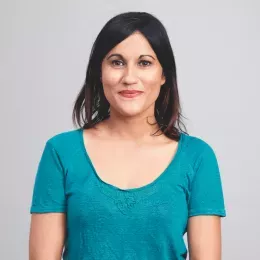
I am a biologist, with a special interest in embryology and the processes of morphogenesis (acquisition of the shape).
I graduated my PhD in 2015 on the study of renal tubule formation in the laboratories of S. Cereghini (Paris, France) and S. Vainio (Oulu, Finland).
I then joined the laboratory of Heart Morphogenesis, led by Sigolène Meilhac for my post-doc.
Since 2022, as a permanent researcher at INSERM, I am studying the mechanics of cardiac morphogenesis.
I obtained my HDR in 2026 and was appointed Principal Investigator at Institut Imagine
Scientific project
Impact of the extracellular matrix mechanical properties on heart morphogenesis
Organ acquisition of shape is key to achieve their specific function. Understanding the mechanisms controlling organ morphogenesis is a major challenge in developmental biology. In the context of cardiac morphogenesis, this also represents a major public health issue since congenital heart disease affects 1% of newborns and is a major cause of perinatal mortality. During embryogenesis, the heart is initially a straight tube that loops into a helix. This looping process is the first asymmetric morphogenesis event in the embryo and positions the future cardiac chambers to establish double blood flow. How cardiac precursor cells receive and interpret the molecular and mechanical asymmetries to form the heart remains largely unknown.
By performing a transcriptomic screen with a unique spatiotemporal resolution during mouse heart looping, we have uncovered asymmetric expression of extracellular matrix (ECM) components. Recent studies suggest an important role of the mechanical properties of the ECM as active factors shaping organs. However, it remains unknown how such mechanical properties influence cardiac progenitors patterning and behavior during heart morphogenesis.
Thus, our research project aims to characterize the mechanical properties of cardiac precursors in relation to ECM composition during heart looping. This interdisciplinary project, carried-out in the mouse model, relies on cutting-edge techniques in quantitative 3D imaging of gene expression and organ shape, as well as advanced genetic and biomechanics. Our work will provide novel insight into asymmetric organogenesis and is relevant to the pathological mechanisms of congenital heart disease.