Published on 05.06.2026
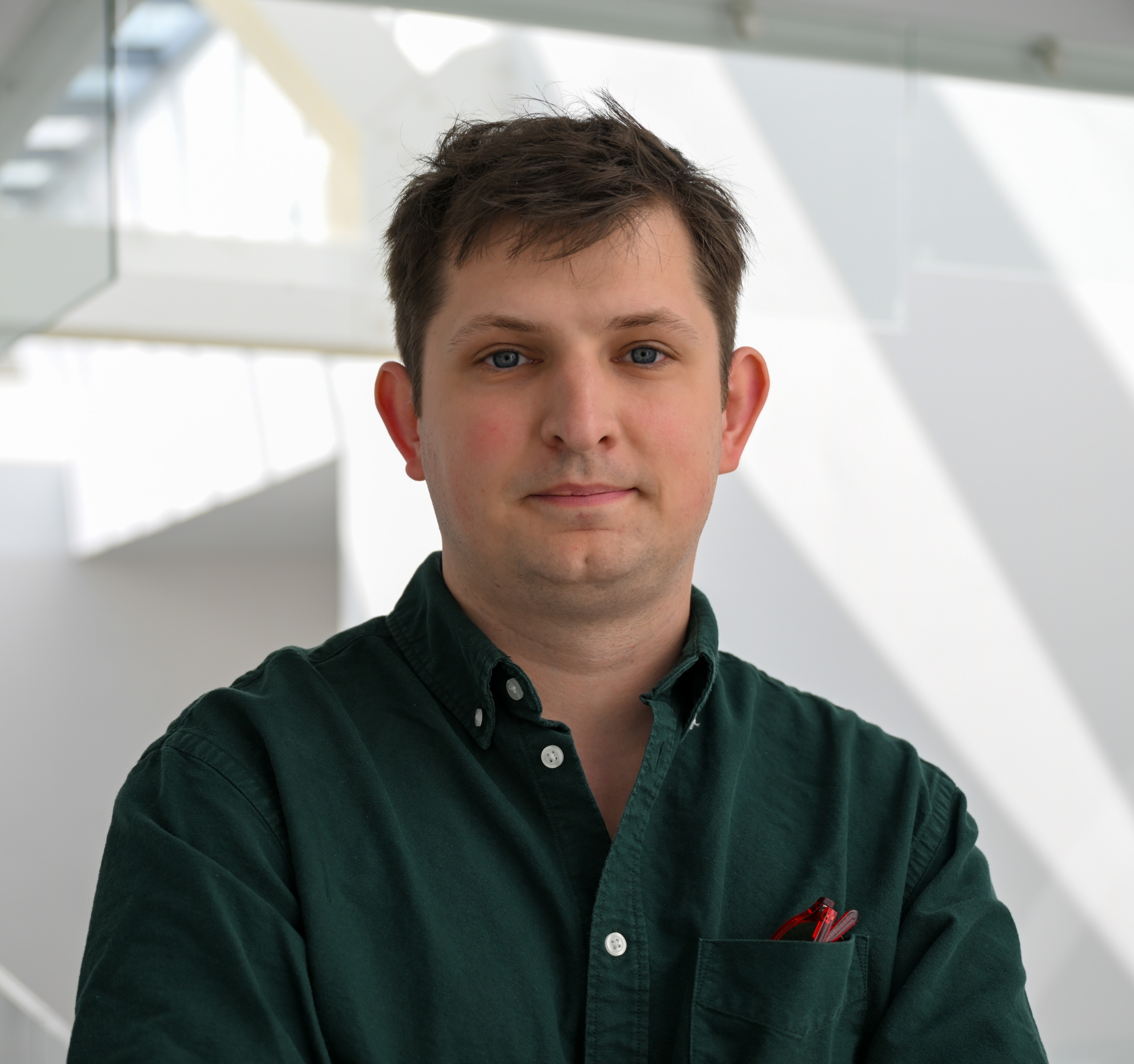
Could you start by telling me a little bit about yourself and your journey to Institut Imagine?
My journey began a long way from biology. I was originally trained as a physicist, and I became interested in statistical physics, which seeks to understand how the simple parts of a complex system conspire to give rise to macroscopic phenomena. It’s not uncommon for statistical physicists to venture into biology, and that was also my case.
I decided to pursue a PhD in biophysics at ENS in Paris and it’s during my doctoral research that I became interested in the mechanisms of mutation. I continued in this direction when I joined Molly Przeworski's lab at Columbia University for a postdoc. It was there that I first heard about Institut Imagine, which stood out as a truly exceptional institution, bringing together researchers with different backgrounds to work towards a shared goal of understanding and treating genetic diseases. I count myself very lucky that the moment I began looking for a permanent position coincided with an opening at Imagine.
What’s your current research focus? How would you explain it to somebody outside of your field?
I try to understand the origins of mutations, the changes in our DNA that occur in our bodies over a lifetime (somatic mutations) or that we pass on to our children (germline mutations).
My research builds on a framework from cancer genetics, where sequencing tumors revealed distinct patterns of mutations called "mutational signatures." Some of these signatures are well understood; we know what causes them. But others, especially those predominant in healthy tissues, remain a mystery. To uncover their sources, I build mathematical models of candidate mechanisms and then test their predictions against genomic data to see what holds up.
What has been the most defining moment in your scientific career so far?
I can't point to a single, dramatic moment. Instead, the defining feature of my career has been a gradual realization that there is a lot of fundamental biology that still awaits discovery and that there is a role to play for someone with my background. The ability to read entire genomes has transformed the field into a truly data-driven discipline. Genomics didn't just change genetics; it changed how all of biology is done and opened the field to new approaches.
For me, it gradually became clear that researchers with quantitative training could make a real contribution. This wasn't a sudden epiphany but rather a series of small discoveries, driven by the exceptional teachers, professors, and colleagues I've had the privilege to work with.
What specifically attracted you to Institut Imagine and what made you choose us over others?
What seems to me very special about the institute is how it brings together basic and translational research. As someone whose background is outside of medicine, I am drawn to this focused, mission-driven environment. Another thing that stood out was that Imagine is a great place to start a new research group, with all the resources needed to make progress in place.
If you could solve one major challenge in rare genetic diseases, what would it be and why?
A major challenge lies in the interpretation of noncoding variants, which still limits diagnosis based on genome sequencing. I hope the next few years will bring progress in our understanding of the regulation of gene expression and we will be able to make sense of regulatory variation.
What excites you the most about the collaborative environment Imagine? And are there any specific teams or projects that you’re eager to work with?
I found it particularly interesting that many labs are interdisciplinary and combine the expertise of clinicians and biologists. I am eager to identify where my specific expertise can bring something new to the table.
I'm already in conversation with Sara Bizzotto, who focuses on somatic mosaicism, and researches the sources and consequences of mutations in brain development. This aligns with my own interests so I'm looking forward to working together. Moving forward, I am excited to connect with many other teams and contribute to the collaborative spirit here.
What first sparked your interest in science and was there a particular moment or person that inspired you?
There was definitely a key person. I had an excellent physics teacher in middle school who was also an active researcher—a very unusual combination. Her enthusiasm for science was palpable and infectious. She didn't just teach the subject; she was a scientist. That was the first moment when I realized that science was not just a school subject, but an interesting and fulfilling career path.
How do you stay motivated when research gets challenging or results don’t come as you expected? How do you stay motivated?
Research almost never goes as expected, but I've been fortunate that nearly all of my work has been collaborative. When you share the work with others, progress or a breakthrough from one member of the team is never too far off. That shared journey and collective effort is a natural and powerful motivator that helps with the inevitable challenges.
Outside of the lab, what do you enjoy doing and how do you recharge?
I’m an amateur musician and enjoy playing music in my spare time. Having been in New York City, I've especially enjoyed the incredible live music scene there. It's my preferred way to recharge.
If you had to describe your research philosophy in one sentence, what would it be?
I'm aiming to find new ways of interrogating genomic data to make sense of genetic variation.
What message would you like to share with the Imagine community as you join us?
Simply that I am thrilled to be here. I have already had the pleasure of meeting a few of you, and I look forward to getting to know everyone better.