Genetics quiz
Click here to take the genetics quiz!
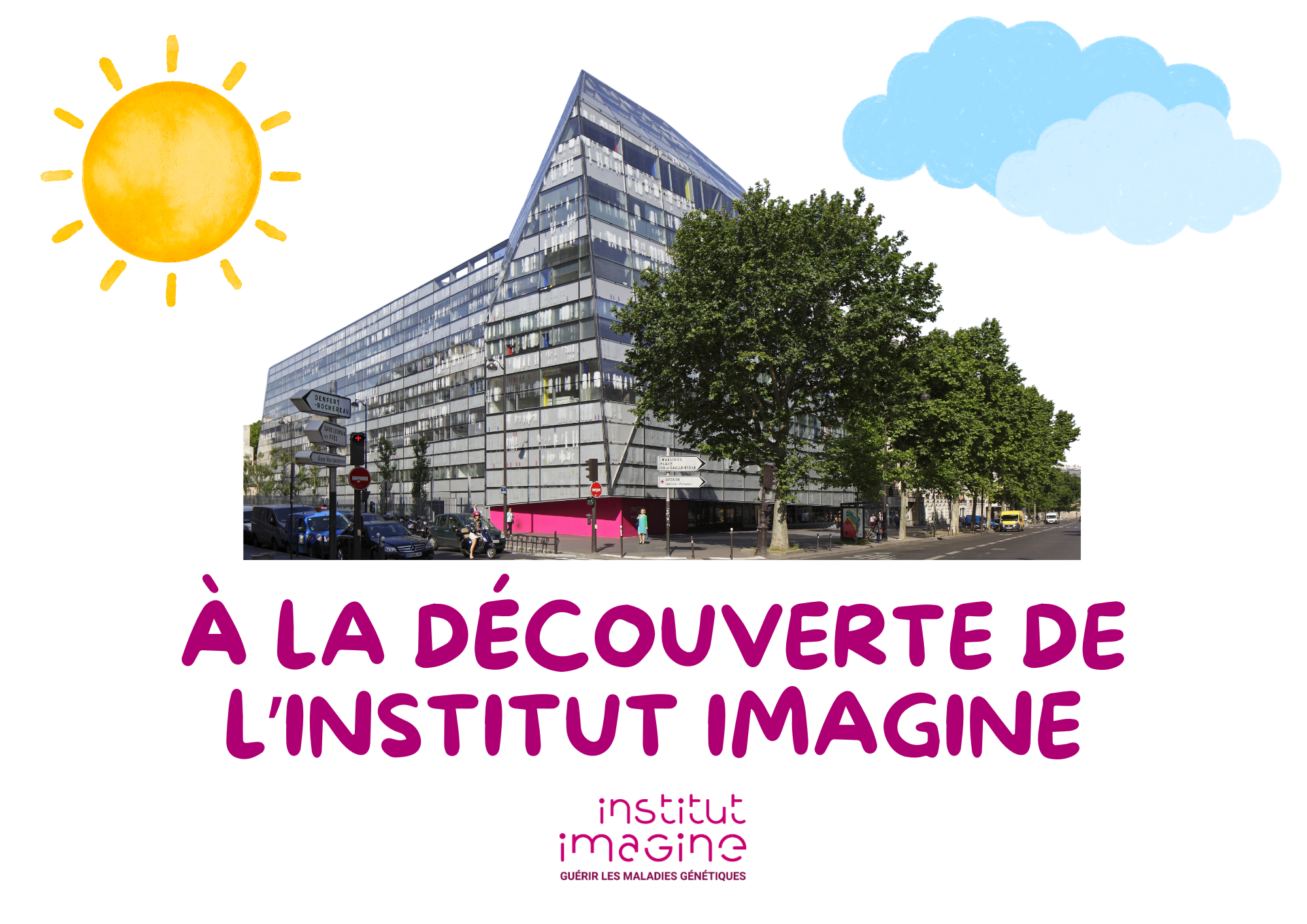
Discovering Institut Imagine
Click here to find out more about the Imagine Institute!
And to download it, click here: Discover the Imagine Institute.pdf !
Video
Glossary
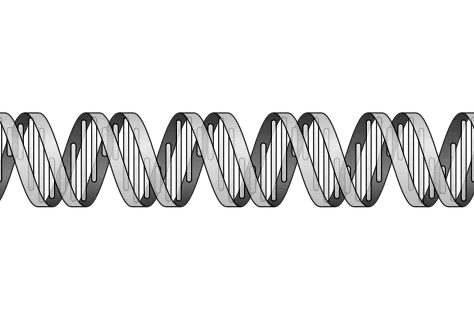
- DNA: short for deoxyribonucleic acid. It is the carrier of genetic information, which determines who we are (whether you have blue or brown eyes, whether you are a girl or a boy, and so on). You may be familiar with it in the form of a double helix; it can be compared to a barcode, which is responsible for your identity. It is made up of four molecules which, when strung together and arranged in a certain way, provide all the genetic information for your body.
- Gene: segments of DNA, with a start and an end, located at a specific point on the DNA helix. It comprises the DNA sequence that codes for a specific protein. It is passed on from a parent to their children; this is known as heredity.
- Genome: The complete set of genes present in every cell of the human body. It can be compared to a collection of musical scores, where each gene in the book is a different score.
- Protein: A small molecule that acts as the body’s workers. Each protein has a very specific job to do (repair, muscle activity, etc.). It is encoded by a gene and carries out the various functions necessary for cells to function properly.
- Sequencing: a technique for decoding DNA, which makes it possible to decipher and obtain an individual’s entire genome. This method is crucial for identifying genetic mutations and helps to pinpoint the genetic cause of certain diseases. It is a bit like decoding a secret message, or all the musical notes in a grand score. This is useful for identifying specific parts of the DNA, just like pinpointing particular notes within the entire score of a piece of music!
- Mutation: a change affecting the DNA of a gene. Like a wrong note in a musical score, it can lead to a lasting change in the expression of that gene, and thus trigger differences in the functions of the human body (affecting the skin, the brain or your immune system). Whilst not all mutations cause genetic disorders, all genetic disorders are caused by a mutation. They are hereditary and can be passed on from a parent to their children.
- Chromosome: A structure composed of condensed DNA, coiled and folded many times upon itself. It is this structure that is passed on from a parent to their children! In humans, each cell has 23 pairs of chromosomes, making a total of 46. Whether you are a boy or a girl depends, in part, on these chromosomes!
- Phenotype: the set of physical characteristics of an individual, determined by their genes and their environment – the things they are exposed to every day. Where you live, what you eat… All of this also influences who you are. To continue the comparison with the musical score, the notes are important, but so is the way the musician plays them!
- Gene therapy: a procedure aimed at modifying a person’s genes to cure them. It is a very complicated procedure, not always possible, but which aims to correct genetic mutations present in patients’ DNA. If we spot a mistake in the musical score, we try to use an eraser to correct it!
- Diagnosis: the analysis of an individual’s genes to identify the causes of a suspected condition. Doctors and researchers work together to determine the cause of a patient’s condition, in order to identify the best possible treatment, or to develop one if it does not yet exist.
- Genetic diseases: diseases caused by a mutation in DNA. All genetic diseases are rare diseases, although not all rare diseases are genetic! Even though they are very rare, one in 20 people in France is affected, and they are very difficult to diagnose.
- Cell: the basic unit of your body. It’s like a Lego brick – there are many different shapes and colours, and they don’t all work in the same way, but when put together, they form the human body! That’s why muscle, bone and brain cells are
- Genetic test: when scientists carry out a genetic test, they analyse all your DNA, which acts as an instruction manual for your body. These tests can reveal interesting information, such as whether there are small differences in your DNA that might explain why you have a particular condition, why your hair or eyes are a certain colour, or why you look like your parents! It’s a very useful tool for understanding our DNA, our genes, and how they define who we are.
Printable activities
- Chemistry at home: the rainbow cabbage
- Colouring page
- Mystery word
- Connect the dots
- Crosswords
- DNA extraction protocol