Presentation
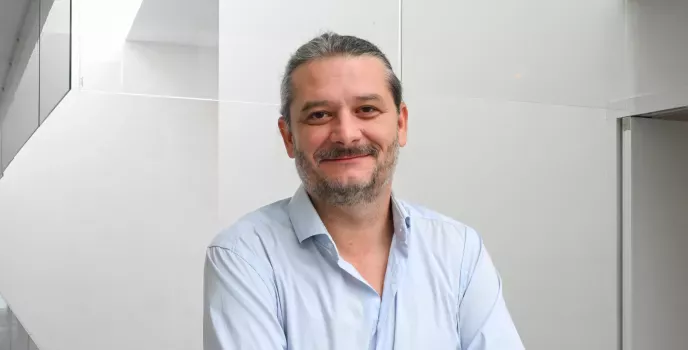
Marion COOLEN
As a developmental biologist, I have long been fascinated by how cells acquire their fate during embryonic development. During my PhD at the CNRS under the supervision of Dr. Sylvie Mazan, I investigated early patterning mechanisms in a chondrichthyan, the catshark, within a comparative evolutionary framework. For my postdoctoral work, I joined Dr Laure Bally-Cuif's laboratory at the Helmholtz Zentrum in Munich, where I was awarded both a European Marie Curie fellowship and an EMBO postdoctoral fellowship. There, I shifted my focus to the regulation of neurogenesis, adopting the zebrafish as a model system. Upon returning to France, I secured a permanent researcher position at INSERM in 2013. In 2020, I joined the team of Vincent Cantagrel at the Institut Imagine to leverage my expertise in developmental biology and fish models toward understanding congenital neurodevelopmental disorders.

Image: Purkinje neurons in the zebrafish cerebellum
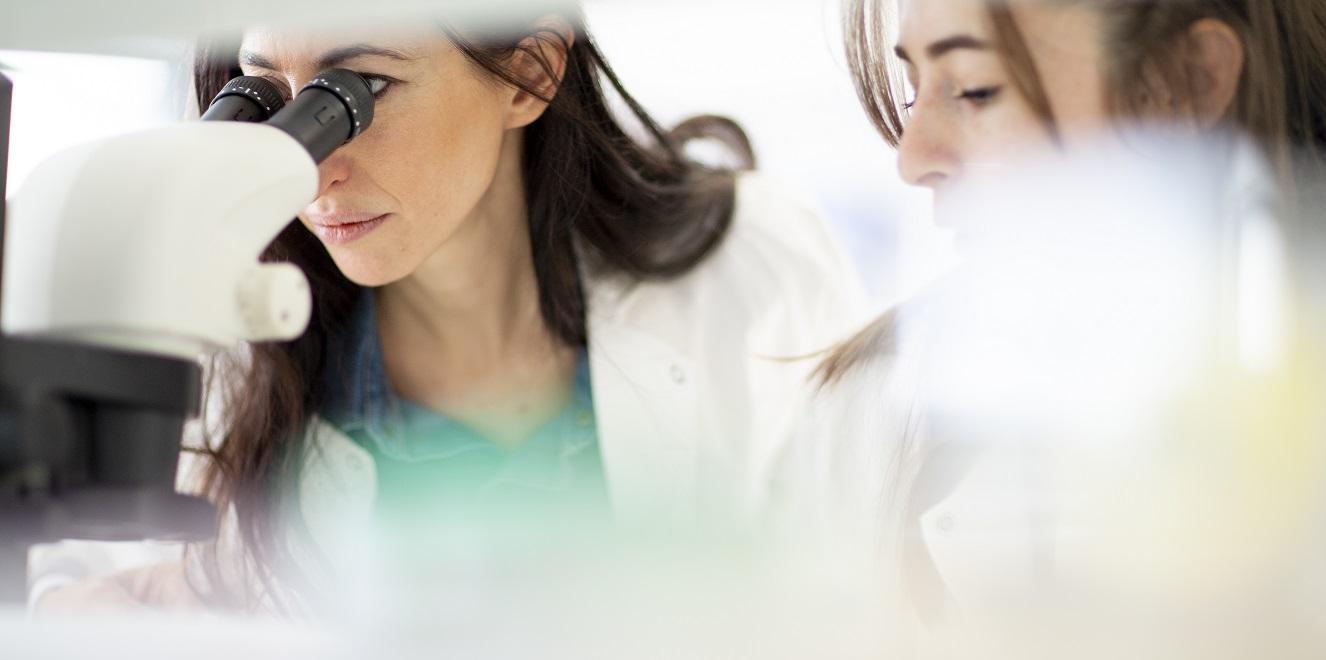
My current projects focus on elucidating pathological mechanisms linked to variants in transcriptional regulators that lead to cell fate anomalies and consequently to early malformations of the cerebellum and brainstem. To investigate these phenomena, we use zebrafish as an in vivo model system to study the developmental consequences of disease-causing variants. In collaboration with colleagues at the Institute, we are notably implementing cutting-edge genome editing technologies in zebrafish to faithfully recapitulate patient-specific variants. In parallel, we are developing and optimizing cerebellar organoid models to complement these approaches and provide access to human-specific developmental processes.
Selected recent publications:
Bertola, N., Blondiaux, E., Harion, M., Dorboz, I., Passemard, S., Mercier, S., Conrad, S., Cogné, B., Boyer, J., Uyttebroeck, S., et al. (2026). Dominant and recessive ATOH1 variants cause distinct neurodevelopmental disorders with hearing loss. Am. J. Hum. Genet. 113, 342–361. https://doi.org/10.1016/j.ajhg.2025.12.016.
Coolen, M., Altin, N., Rajamani, K., Pereira, E., Siquier-Pernet, K., Puig Lombardi, E., Moreno, N., Barcia, G., Yvert, M., Laquerrière, A., et al. (2022). Recessive PRDM13 mutations cause fatal perinatal brainstem dysfunction with cerebellar hypoplasia and disrupt Purkinje cell differentiation. Am. J. Hum. Genet. 109, 909–927. https://doi.org/10.1016/j.ajhg.2022.03.010.
Team members:
Benjamin Lepennetier, PhD student
Joël Boivin, Engineer
Resources & publications
-
2022Journal (source)Am J Hum GenetRecessive PRDM13 mutations cause fatal perinatal brainstem dysfunction with c...
-
2020Journal (source)Curr BiolMosaic Heterochrony in Neural Progenitors Sustains Accelerated Brain Growth a...