
Présentation

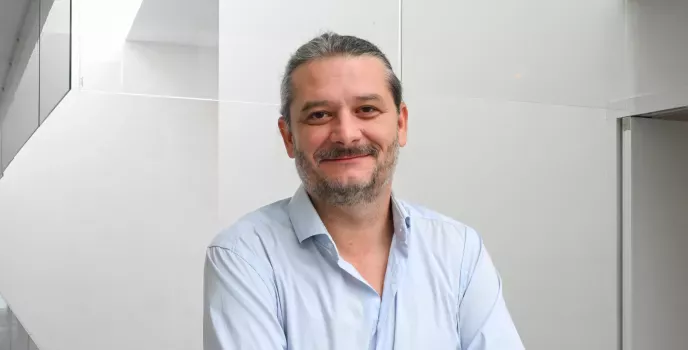
Developmental Neurobiologist | PhD, HDR

FC

Contact

01 42 75 45 68

Fate specification in the developing cerebral cortex

I am a developmental neurobiologist interested in the cellular and molecular mechanisms of brain development, especially neuronal fate specification and cell death/survival in the cerebral cortex. My aim is to understand the gene regulatory networks underpinning these processes and how their dysregulations can lead to pathologies.

We typically use single-cell RNAseq to characterize progenitor cells, mature neurons and intermediate cell states, allowing to reconstruct the developmental differentiation trajectories for distinct lineages. We combine with mouse genetics to investigate pathways of interest, using histology for tissue validation.

Figure


I was trained at the Magistère de Biologie from École Normale Supérieure, followed by a PhD from Université Paris VI in 2004. I obtained an EMBO fellowship to conduct postdoctoral work at Imperial College (London, UK), before returning to France in 2007 with an Inserm Junior position. I was recruited as a tenured Inserm researcher in 2012 and obtained my HDR from Université Paris VII in 2014. I was appointed as a Theme Leader by the scientific advisory board of Imagine in 2021 and designated as Principal Investigator in 2026. I am also an elected representative of Imagine researchers, a member of the Executive Committee, and a gender equality representative.

Projects:

Cajal_RetziusInterplay between cell identity and programmed cell death

We investigate how genetic programs regulate cell viability during neuronal fate specification, using Cajal-Retzius cells, a transient neuronal population in the developing cerebral cortex, as a model. By integrating single-cell transcriptomics and mouse genetics, we reconstruct normal and defective differentiation trajectories to explore how alterations in cell identity and lifespan are biologically governed. Our research also aims to elucidate the gene regulatory networks controlling cell death and survival mechanisms during brain development.


LNPLipid nanoparticles to model and correct neurodevelopmental diseases

Lipid nanoparticles (LNPs) are emerging as a powerful tool for delivering nucleic acid payloads into cells, offering key advantages: multifaceted nucleic acid delivery, low immunogenicity, high cargo capacity (enabling genome-editing and large gene constructs), and scalable manufacturing. Our project bridges basic research and preclinical development by employing this innovative methodological approach to model neurodevelopmental disorders in vivo and explore interventions at their mechanistic roots.


HumanCortexFOXG1 syndrome

FOXG1 syndrome, a rare neurodevelopmental disorder, is characterized by microcephaly, drug-resistant epilepsy, severe psychomotor delay, and intellectual disability. It results from de novo heterozygous dominant mutations in the FOXG1 gene. To improve patient outcomes, we must deepen our understanding of its molecular and cellular consequences, establish biomarkers for early diagnosis, and develop translational readouts for future therapies. Our project aims to characterize cell fate specification defects in human and mouse tissues using single-cell and spatial transcriptomics, and implement and test novel therapeutic strategies in animal models of the disorder.


Selected recent publications:

  • Differential contribution of P73+ Cajal-Retzius cells and Reelin to cortical morphogenesis. (2025) Elorriaga V, Bouloudi B, Delberghe E, Saillour Y, Morel JS, Azzam P, Moreau MX, Stottmann R, Bahi-Buisson N, Pierani A, Spassky N, Causeret F. Development 152:dev.204451. DOI: 10.1242/dev.204451

    In this paper, we provide novel insights in the contribution of Cajal-Retzius neurons and Reelin during cerebral cortex development. Our work demonstrate Reelin-independent functions for Cajal-Retzius neurons during hippocampal morphogenesis.

  • Repurposing of the multiciliation gene regulatory network in fate specification of Cajal-Retzius neurons. (2023)  Moreau M, Saillour Y, Elorriaga V, Bouloudi B, Delberghe E, Deutsch Guerrero T, Ochandorena-Saa A, Maeso-Alonso L, Marques MM, Marin MC, Spassky N, Pierani A, Causeret F. Dev Cell 58(15):1365-1382.e6. DOI: 10.1016/j.devcel.2023.05.011

    In this paper, we characterize the differentiation trajectory of Cajal-Retzius cells and unravel the implication of multiciliogenesis genes in their fate specification. We demonstrate how the same gene module can control two very distinct biological processes depending on the cellular context. Our work exemplify how novel cell identities can emerge during evolution.

  • Cajal-retzius cells: Recent advances in identity and function.  (2023) Elorriaga V, Pierani A, Causeret F. Curr Opin Neurobiol. 79:102686. DOI: 10.1016/j.conb.2023.102686

    In this review, we summarize current knowledge about Cajal-Retzius neurons, with a special focus on the mechanisms involved in their specification and transient lifespan.

  • Single-cell transcriptomics of the early developing mouse cerebral cortex disentangles the spatial and temporal components of neuronal fate acquisition.  (2021) Moreau MX, Saillour Y, Cwetsch AW, Pierani A, Causeret F. Development 148(14):dev197962. DOI: 10.1242/dev.197962

    In this paper, we disentangle the gene modules underlying temporal versus spatial regulations of neuronal specification in the cerebral cortex. We propose a model by which the superimposition of spatial information and temporal maturation enables the production of discrete neuronal identities from a continuous gradient of progenitors.

Team members:

Juliette Morel, PhD student

Elodie Delberghe, PhD student

Alexandrine Garrigue, Engineer


Alumni:

Vicente Elorriaga, PhD

Matthieu Moreau, PhD

Iffat Sumia, PhD

Muriele Nguyen Huy

Liloïe de la Guillonière

Benjamin Bremaud

Mehdi Indari

Thandi Philippe

Tanya Deutsch-Guerrero

Stephen Babin

Esther Hondré

Funding:

Logo_ANR


Logo IdEx


Logo_Imagine


Full publication list and ORCID profile:

pubmed_logo
Orcid_light

Ressources & publications